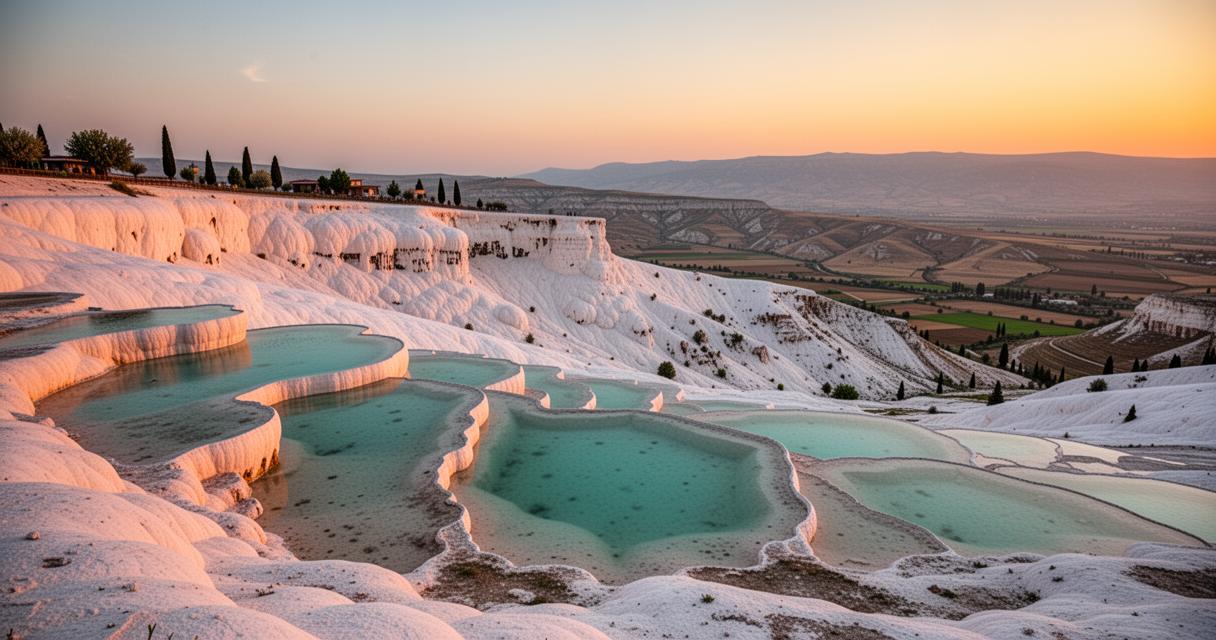
Tucked away in south-western Turkey, the twin wonders of Pamukkale and Hierapolis represent one of the most extraordinary destinations in the world. Whether you are planning a grand tour of Turkey taking in Istanbul, Izmir, Ephesus and Cappadocia, or simply seeking a memorable day excursion, these hidden treasures promise an experience unlike any other. Few places on earth manage to fuse natural spectacle with ancient history quite so seamlessly, and that is precisely what makes a visit here so compelling.
In brief
- Pamukkale and Hierapolis are UNESCO World Heritage sites in Turkey that uniquely combine stunning natural thermal terraces with extensive ancient ruins.
- The white travertine terraces were formed over millennia by mineral-rich thermal springs depositing layers of calcium carbonate.
- Visitors are encouraged to walk barefoot on the travertines to experience the site while following marked paths to preserve the delicate landscape.
- The ancient city of Hierapolis, founded in the second century, served as a renowned spa destination centered around its healing thermal waters.
- The Cleopatra Pool allows visitors to swim among submerged Roman architectural relics, providing a rare opportunity to interact with ancient history.
- Practical preparation, including sun protection and comfortable attire, is essential for exploring the site, especially during the intense summer months.
- Hiring local guides is highly recommended to provide historical context and geological insights, ensuring a more meaningful experience for travelers.
Exploring the Marvels of Pamukkale Travertine Terraces
From the moment you set eyes on Pamukkale, it becomes clear why travellers journey from across the globe to stand before its iconic white terraces. The name itself translates as Cotton Castle in Turkish, and the landscape truly resembles an enormous cascade of snow-white cotton draped across the hillside. Recognised as a UNESCO World Heritage site, Pamukkale’s travertines are the result of a remarkable geological process that has been unfolding for thousands of years.
Dip into Thermal Waters and Natural Basins
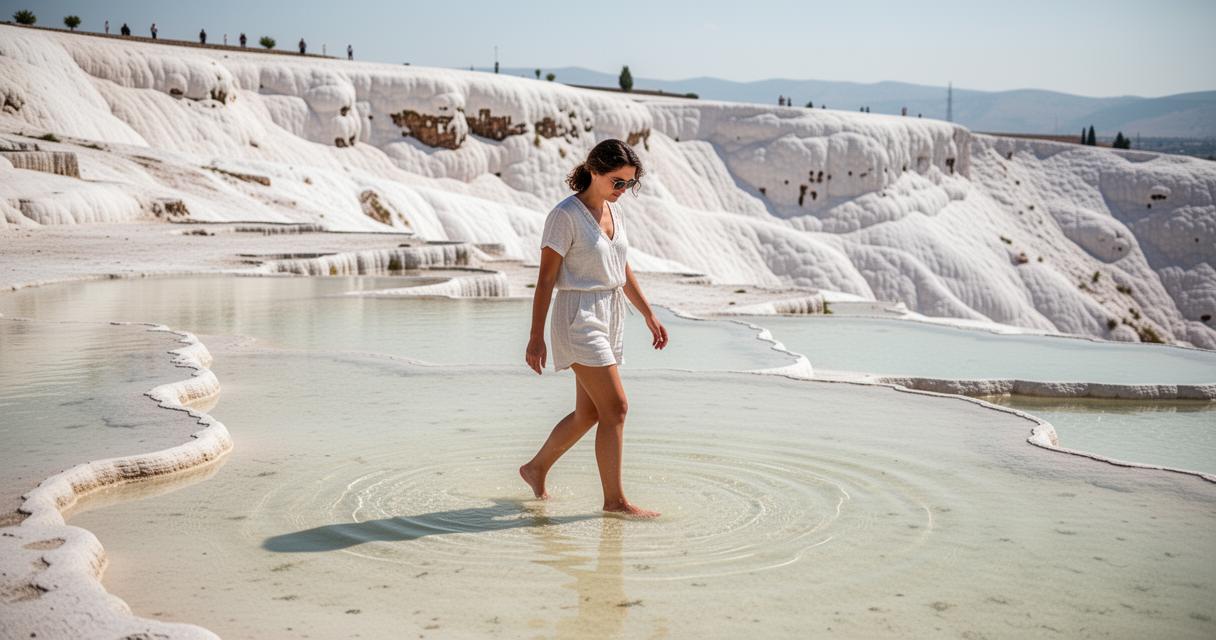
The science behind this ethereal landscape is fascinating in its own right. Calcium carbonate-rich water bubbles up from the earth via thermal springs, and as it flows down the hillside and cools, it deposits layers of white mineral sediment. Over millennia, these deposits have formed the series of stepped natural basins that now define the site. The thermal waters that fill these basins are warm and inviting, and visitors are encouraged to paddle in the shallower pools, feeling the silky mineral-rich water against their skin. It is worth noting that access to certain terraces is carefully managed to preserve the delicate formations, so you should follow the marked walking paths.
Marvel at the Unique Cotton Castle Landscape
One of the most distinctive aspects of exploring the Pamukkale travertines is the tradition of walking barefoot across the terraces. Removing your shoes before stepping onto the brilliant white surface creates a direct, sensory connection with the landscape that no photograph can truly capture. The contrast between the stark white calcium formations and the vivid turquoise of the thermal pools creates a scene of almost surreal beauty. Those travelling from major hubs such as Istanbul, Izmir or even on a cruise stopping at a nearby port will find that organising a day trip to Pamukkale is well worth the effort, as the terraces are most breathtaking in the morning light.
Unveiling the Ancient Ruins of Hierapolis City
Rising directly above the travertines, the ancient city of Hierapolis adds a profound layer of historical depth to any visit. Founded in the second century, this remarkable settlement was built around the very thermal sources that created the travertines below, making it one of the ancient world’s most celebrated spa cities. Today, its extensive archaeological ruins form a key part of the UNESCO World Heritage designation shared with Pamukkale, and wandering through them feels like stepping directly into antiquity.
Discover the History of the Thermal City
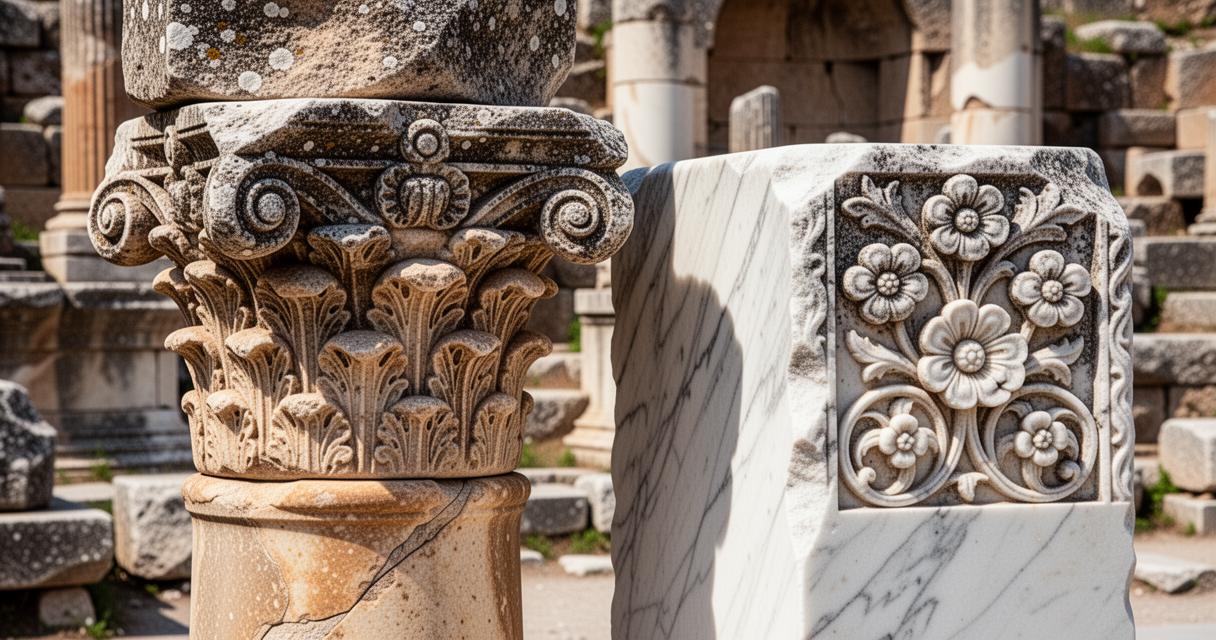
The Hierapolis ancient city offers an abundance of historical sites to explore. At the heart of the urban landscape, the Roman bath complex stands as a testament to the sophisticated culture that flourished here, where citizens and travellers alike sought the healing properties of the thermal waters. Nearby, a grand basilica reflects the city’s later transition into an important early Christian centre. Frontinius Street, one of the best-preserved thoroughfares, still bears the remnants of shops and domestic dwellings, offering a vivid glimpse into daily life in this once-thriving city. The Temple of Apollo is particularly striking, its elegant columns and refined stonework hinting at the religious devotion that shaped the community’s identity throughout the centuries.
Swim amongst history in cleopatra pool
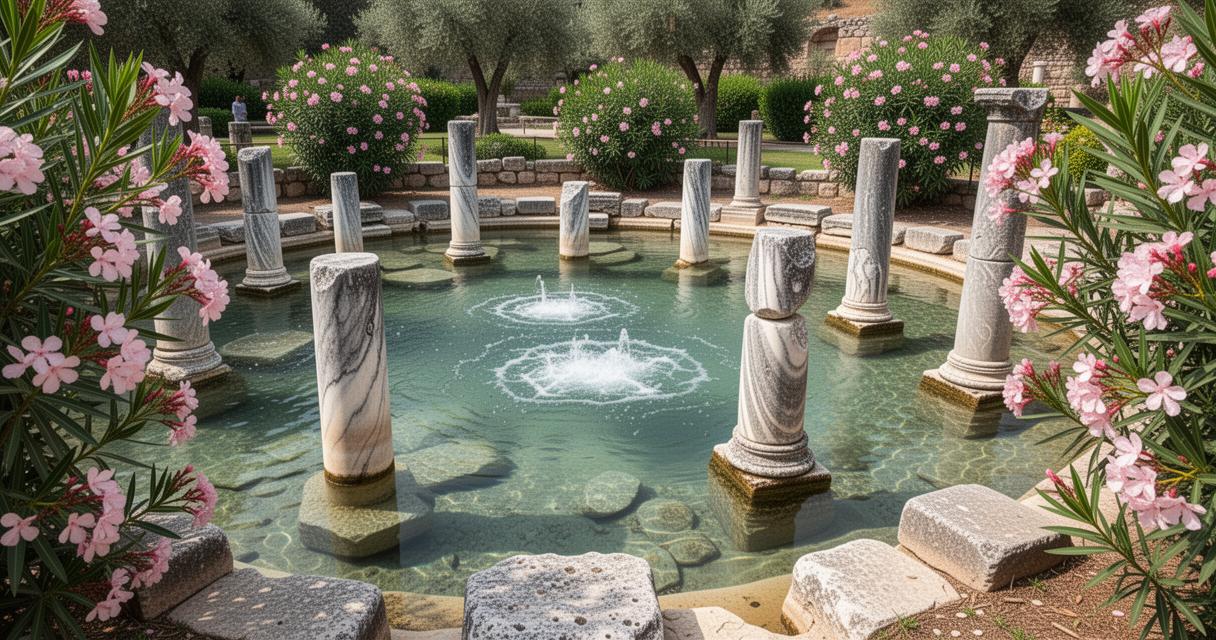
Of all the experiences Hierapolis has to offer, swimming in the Cleopatra thermal pool is undoubtedly among the most extraordinary. Named in honour of Queen Cleopatra, this open-air pool is fed by the same ancient thermal springs that have defined this landscape since antiquity. What sets it apart from any ordinary swim is the remarkable sight of genuine Roman relics submerged beneath the water’s surface, broken columns, carved stonework and architectural fragments that sank into the pool following earthquakes long ago. Floating above these ancient remnants while surrounded by the ruins of Hierapolis is a genuinely unforgettable experience, and one that epitomises the unique magic of this destination.
Essential practical advice for your holiday excursion
A little preparation goes a long way when it comes to making the most of your visit to Pamukkale and Hierapolis. The site can be explored as a standalone day trip or incorporated into a broader travel itinerary covering Turkey’s wealth of cultural and natural discovery opportunities. Whether you are based in Istanbul, taking a tour from Izmir, travelling from Cappadocia or arriving via a cruise, the site is accessible and rewards careful planning.
Pack Your Sun Cream and Solar Hat for the Day
The Turkish sun can be intense, particularly during the summer months when the white terraces reflect the light with dazzling brilliance. Bringing a generous supply of sun cream and a wide-brimmed solar hat is absolutely essential. Comfortable footwear is equally important, though remember that shoes must be removed before walking on the travertines themselves. Carrying a small bag with a change of clothes and a light towel is advisable if you plan to wade in the pools or take a dip in Cleopatra’s legendary waters. Staying well-hydrated throughout the day will also help you make the most of the extensive walking involved across both the natural site and the ancient ruins.
Hire Local Guides for an Unforgettable Experience
To truly appreciate the depth of history and geology on display, engaging local guides and experts is highly recommended. Knowledgeable guides bring both sites to life with context and narrative that enriches every corner of the experience, from the formation of the travertine terraces to the political and social history of Hierapolis. For those who enjoy seeing the wider landscape from above, a scenic balloon ride offers a spectacular perspective over the cotton-white hillside and the surrounding valleys. Various excursions and activities are available to suit different schedules and budgets, making it straightforward to find an option that fits your holiday plans. With its extraordinary blend of natural wonder and ancient heritage, Pamukkale and Hierapolis stand as two of Turkey’s most remarkable and rewarding destinations.